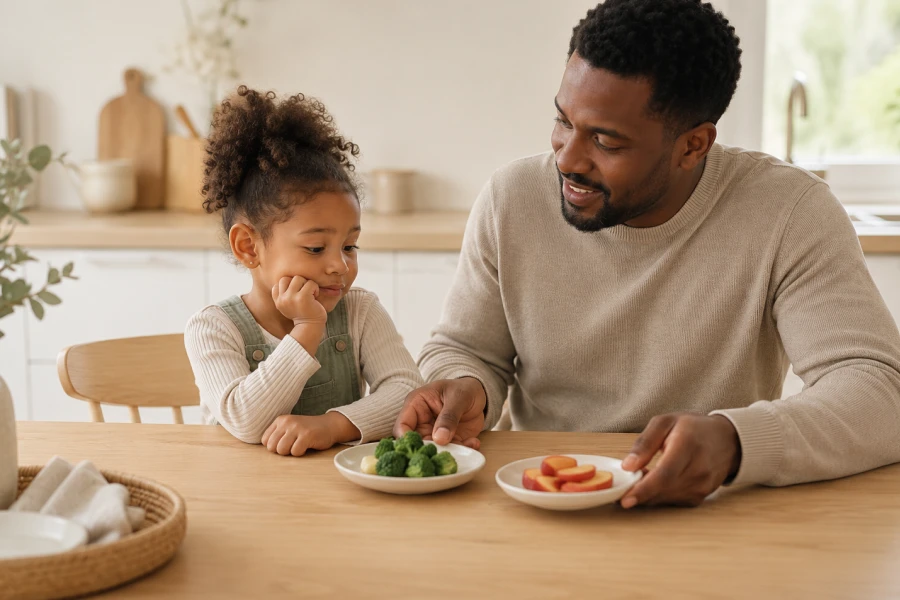
Child food choice confidence grows when children feel included, respected, and gently guided during meals. Many parents want healthier plates, yet pressure often creates resistance instead of curiosity. A child who helps choose food usually feels more ownership. That ownership can lower tension before dinner begins. It also gives parents a calmer way to introduce variety. Small choices work better than open-ended control. Two vegetable options feel safer than a full menu. This approach supports trust, cooperation, and a more peaceful table.
Mealtimes often become stressful when adults carry every decision. Children sense that pressure quickly. They may push back simply to feel control. A calmer approach starts with shared participation. Parents still set the structure. Children get a voice inside that structure. This balance feels fair and predictable. It also supports positive parenting for picky eaters without turning dinner into a negotiation. Over time, food feels less like a battle.
Power struggles usually grow from fear, fatigue, or surprise. A child may reject food before tasting it. That reaction does not always mean dislike. Sometimes the plate feels unfamiliar. Sometimes the timing feels rushed. Offering limited choices can soften that reaction. Parents might ask whether carrots or cucumbers should join dinner. The meal still remains balanced. The child still participates meaningfully. This small shift creates cooperation without giving away parental leadership.
A low-pressure table does not mean ignoring nutrition. It means creating space for progress. Children need repeated exposure before comfort appears. Some foods require many calm introductions. Parents can model tasting without forcing imitation. They can describe texture, color, or smell neutrally. This helps children notice food without judgment. A steady calm mealtime routine makes new foods feel less dramatic. Confidence grows through repetition, not pressure.
Choice works beautifully when parents define the frame. Children do not need unlimited options. They need safe, clear, manageable decisions. A parent might choose the protein and grain. The child can choose a fruit or vegetable. Another night, the child can pick the dipping sauce. Boundaries prevent chaos while preserving participation. They also make expectations easier to repeat. When everyone understands the pattern, dinner becomes less emotionally loaded.
Picky eating often feels personal to parents. Yet many children are responding to sensory preferences. Texture, smell, temperature, and appearance matter. A food may seem acceptable one day and impossible the next. That inconsistency can frustrate adults. Patience helps parents stay steady. Simple exposure supports picky eater support in a realistic way. Children learn that trying is safe. Parents learn that progress can be quiet.
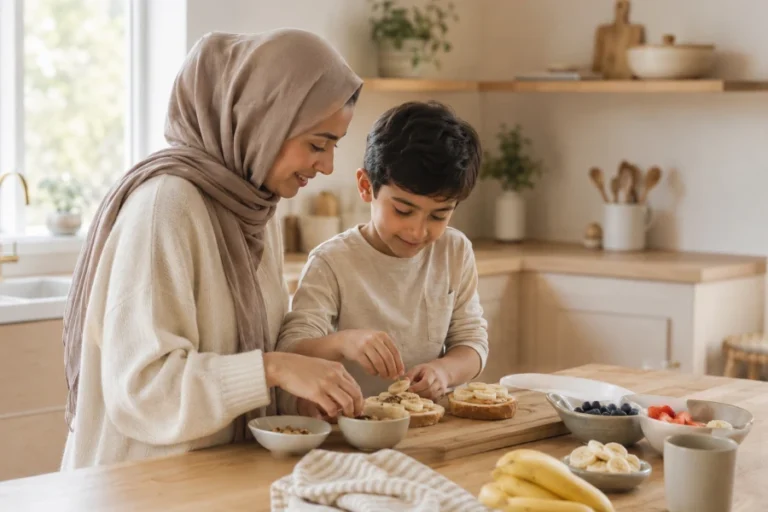
The dinner table is not the only place for participation. Grocery planning offers another gentle opportunity. Children can pick between two fruits. They can choose one lunchbox vegetable. They can help select a yogurt flavor. These small moments build familiarity before food reaches the plate. Familiarity makes tasting feel less sudden. It also teaches planning skills. Food becomes something children help organize, not something imposed without warning.
Parents often expect visible change too quickly. Food confidence rarely develops in a straight line. A child may taste something once, then refuse it later. That does not mean the approach failed. It means development is still happening. Keep the tone steady. Celebrate curiosity more than clean plates. Notice tiny wins. A sniff, touch, or lick can matter. Progress becomes easier to see when expectations stay realistic.
Children remember how meals feel. They remember whether food came with shame. They remember whether adults listened. When parents offer respectful choices, meals become more secure. Trust opens the door to curiosity. Curiosity opens the door to trying. The family table becomes a place of connection. Healthy eating then feels less like a rule. It starts to feel like a shared family rhythm.

Leave a comment